










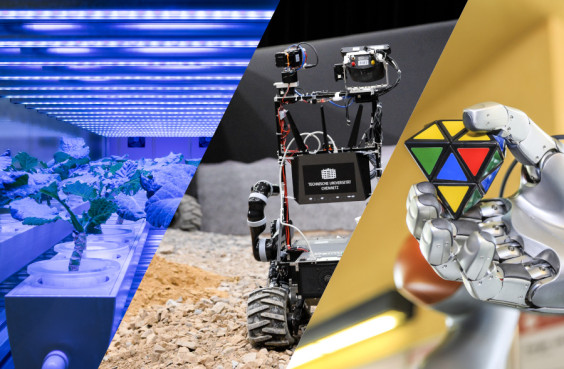
ADVANCED MANUFACTURING (eAM) is an international, interdisciplinary, peer-reviewed academic journal dedicated to publishing high-quality original research covering all fields within the discipline of advanced manufacturing. The journal engages with a broad spectrum of topics—from additive manufacturing to precision machining, from smart manufacturing systems to digital factories, from manufacturing process modelling to supply chain integration—providing a serious and open scholarly platform for global manufacturing scientists, engineers, industrial R&D professionals, policy-makers, and educators.
The core conviction of eAM is “Reshaping the future of human production through manufacturing innovation.” Manufacturing is a core pillar of a nation’s industrial capability and economic competitiveness. In an era when Industry 4.0, artificial intelligence, digital twins, and sustainable manufacturing are profoundly reshaping the global production landscape, advanced manufacturing research stands at the intersection of engineering science, information technology, materials science, and management science. We believe that advancing the frontiers of advanced manufacturing requires the deep coupling of fundamental research and engineering application, a multiscale vision that spans from unit processes to system integration, and above all, the free global circulation of knowledge. The journal adopts a flexible publication policy that takes Open Access as the default model while allowing Non-Open Access publication under special circumstances, balancing the global free dissemination of scholarship with the specific needs of particular research contexts.
eAM operates a Hybrid Open Access Model, with the following specific policies:
Default Model: Full Open Access
In the vast majority of cases, eAM operates as a Diamond Open Access journal:
Free for all readers: All articles published under the Open Access model are immediately, permanently, and unconditionally available to readers worldwide. No subscription, no registration, no paywalls. We believe that research findings on advanced manufacturing should be freely accessible to engineers, manufacturing enterprises, researchers, students, and policy-makers worldwide, to accelerate the translation of knowledge from laboratory innovation to factory practice.
Zero or minimal cost for authors: eAM completely waives Article Processing Charges for papers recognised through peer review as being of exceptional scholarly quality, demonstrating outstanding originality and engineering impact. For other Open Access papers, the journal charges only a minimal fee far below industry standards, solely to sustain basic operations. Authors from under-resourced regions and the Global South may apply for full or partial fee waivers.
Open licensing: All Open Access articles are published under the Creative Commons Attribution License (CC BY 4.0). Authors retain copyright of their work and grant anyone the right to share, adapt, and reuse the material, provided appropriate credit is given, to maximise knowledge dissemination and technological innovation diffusion in the field of advanced manufacturing.
Special Cases: Non-Open Access
In the following special circumstances, upon author request and with the approval of the editorial team, articles may be published under a Non-Open Access model:
Funder mandates: Certain corporate-funded manufacturing R&D projects, defence industry-related programmes, or collaborative commercial research impose specific confidentiality or access restrictions that conflict with the CC BY licence of full Open Access.
Commercially sensitive information and intellectual property protection: Content involving undisclosed manufacturing process parameters, proprietary equipment designs, production formulations, quality control algorithms, commercially valuable process performance data, or key technical details in pending patent applications, where full open dissemination could harm the legitimate interests of the relevant enterprises or research partners.
National security and export control: Content involving dual-use manufacturing technologies, precision machining technologies subject to export control regulations, or research with potential implications for the defence industry, where full open dissemination could violate relevant laws and regulations.
Authors’ specific publication needs: Authors may request Non-Open Access publication based on reasonable grounds such as career development, institutional evaluation requirements, patent application timelines, or future commercialisation plans.
Legal and compliance requirements: Laws and regulations in certain countries or regions impose specific restrictions on the dissemination of content involving sensitive manufacturing technology, defence-related research, or controlled equipment.
Under the Non-Open Access model: articles will be published under traditional subscription or paid-access arrangements; copyright arrangements and licensing conditions will be negotiated separately with authors; the journal will clearly mark the access status in the article’s metadata to ensure full transparency. The proportion of Non-Open Access articles will be strictly controlled to ensure that the journal’s overall Open Access character is not diluted. The editorial team retains final decision-making authority over the approval of Non-Open Access publication, and this decision will not affect the academic standards of peer review.
eAM is rooted in the rich scholarly traditions of manufacturing science and engineering while actively responding to the profound transformation demands that Industry 4.0, artificial intelligence, digital twins, and carbon neutrality goals place on manufacturing. The journal’s fundamental position is that advanced manufacturing research needs to transcend the limitations of single processes, build bridges between unit technology breakthroughs and system-level integration, and attend to sustainability, resilience, and human-centricity while pursuing efficiency and precision. We reject the reduction of manufacturing research to the isolated optimisation of single process parameters, just as we reject purely data-driven modelling divorced from physical foundations. eAM is committed to publishing research that is both scientifically rigorous and practically relevant, both advancing disciplinary frontiers and responding to industrial needs.
The journal covers all fields of advanced manufacturing and especially welcomes high-quality submissions in the following areas:
Additive Manufacturing and 3D Printing
Powder bed fusion, directed energy deposition, and binder jetting
Vat photopolymerisation, material extrusion, and material jetting processes
Additive manufacturing materials: metals, ceramics, polymers, and composites
Multiscale modelling and process simulation of additive manufacturing
Microstructure, defects, and property control of additively manufactured parts
Topology optimisation and design for additive manufacturing
Hybrid additive manufacturing and combined additive-subtractive processes
Post-processing, quality certification, and standardisation of additively manufactured parts
Large-format and multi-material additive manufacturing systems
Applications of additive manufacturing in aerospace, medical, and energy sectors
Precision and Ultra-Precision Machining
Cutting processes: advanced turning, milling, drilling, and grinding
Ultra-precision machining: nanoscale surface integrity control
Electrical discharge machining, electrochemical machining, and laser machining
Micro- and nano-machining: micro-milling, micro-drilling, and micro-fabrication
Vibration-assisted machining and hybrid machining technologies
Modelling, simulation, and optimisation of machining processes
Tooling technology, coating technology, and tool condition monitoring
Machining strategies for hard-brittle and difficult-to-machine materials
Machined surface integrity, residual stresses, and fatigue performance
Forming Manufacturing and Materials Processing
Advanced casting, forging, rolling, and extrusion technologies
Sheet metal forming: stamping, hydroforming, and incremental forming
Powder metallurgy, sintering, and hot isostatic pressing
Injection moulding, extrusion, and polymer processing
Composite manufacturing: lay-up, filament winding, and liquid moulding
Welding and joining: laser welding, friction stir welding, and dissimilar material joining
Heat treatment and surface engineering
Micro-forming and precision forming technologies
Digital simulation and intelligent optimisation of forming processes
Smart Manufacturing and Industry 4.0
Architectures, standards, and reference models of smart factories
Industrial Internet of Things (IIoT) and the interconnection of manufacturing systems
Digital twins: virtual replication and real-time synchronisation of manufacturing systems
Cyber-Physical Systems (CPS) and smart manufacturing cells
Big data and quality prediction in manufacturing processes
Applications of artificial intelligence and machine learning in manufacturing
Integration of Manufacturing Execution Systems (MES) and Enterprise Resource Planning (ERP)
Flexible manufacturing, reconfigurable manufacturing, and modular production
Cloud manufacturing, networked collaborative manufacturing, and Manufacturing as a Service
Applications of 5G/6G communication technologies in smart factories
Automation and Robotic Manufacturing
Applications of industrial robots and collaborative robots in manufacturing
Robotic machining, assembly, and material handling
Autonomous Mobile Robots (AMR) and intelligent logistics
Machine vision and in-line inspection
Human-robot collaboration: safety, ergonomics, and task allocation
Design of flexible automated assembly lines
Robot programming, offline simulation, and virtual commissioning
Soft robotics and novel actuators
Coordination and scheduling of multi-robot systems
Manufacturing Systems and Operations Management
Lean manufacturing, Six Sigma, and continuous improvement
Modelling, simulation, and optimisation of manufacturing systems
Production planning and scheduling: from deterministic to uncertain environments
Supply chain management and manufacturing network design
Inventory management, material requirements planning, and just-in-time production
Resilience, risk management, and disruption recovery of manufacturing systems
Design and operation of sustainable manufacturing systems
Servitisation, product-service systems, and remanufacturing
Global manufacturing networks and international production division of labour
Precision Measurement and Quality Engineering
In-line measurement, in-situ measurement, and process monitoring
Coordinate measurement, optical measurement, and surface topography characterisation
Non-destructive testing: ultrasonic, radiographic, eddy current, and thermographic
Statistical process control and quality control
Measurement system analysis and uncertainty evaluation
Intelligent sensing and embedded measurement
Digital twin-based quality prediction and compensation
Tolerance design, assembly accuracy, and geometric dimensioning measurement
Capability analysis and quality improvement of manufacturing processes
Sustainable Manufacturing and Green Manufacturing
Energy-efficient manufacturing processes and systems
Carbon emissions accounting and reduction strategies in manufacturing processes
Circular manufacturing: remanufacturing, repair, and recycling
Green material selection and Life Cycle Assessment (LCA)
Resource efficiency and waste minimisation in manufacturing
Sustainable supply chains and green procurement
Energy management and renewable energy integration in manufacturing facilities
Eco-design and design for recycling
Carbon-neutral factories: pathways, technologies, and policies
Digital Design and Manufacturing Integration
Computer-Aided Design (CAD) and Engineering (CAE)
Design for Manufacturing and Assembly (DFMA)
Model-Based Definition (MBD) and paperless manufacturing
Product Lifecycle Management (PLM) systems
Virtual prototyping, virtual commissioning, and virtual factories
Knowledge engineering and design automation
Digital design in hybrid additive-subtractive manufacturing
Customisation and mass customisation design
Micro/Nano Manufacturing and Precision Equipment
MEMS and NEMS manufacturing
Semiconductor manufacturing processes and equipment
Photolithography, electron beam lithography, and nanoimprint
Thin film deposition, etching, and planarisation
Microfluidic chip fabrication
Design of precision machine tools and ultra-precision equipment
Nanometrology and nano-fabrication
Cleanroom technology and microenvironment control
Quality control and defect management in micro/nano manufacturing
Materials Processing and Surface Engineering
Laser surface treatment, ion implantation, and plasma treatment
Thermal spraying, cold spraying, and high-velocity oxy-fuel spraying
Physical Vapour Deposition (PVD) and Chemical Vapour Deposition (CVD)
Functional coatings: wear-resistant, anti-corrosion, thermal barrier, and antibacterial
Surface texturing and tribological design
Surface integrity: residual stresses, micro-hardness, and microstructural evolution
Electroplating, electroless plating, and composite coatings
Failure analysis and lifetime prediction in surface engineering
Surface protection for extreme environments
Advanced Composite Manufacturing
Manufacturing processes for fibre-reinforced composites
Automated Tape Laying (ATL) and Automated Fibre Placement (AFP)
Resin Transfer Moulding (RTM) and vacuum-assisted moulding
Autoclave curing and cure cycle optimisation
Ceramic matrix and metal matrix composite manufacturing
Composite machining: drilling, cutting, and edge quality
Non-destructive testing and health monitoring of composites
Mechanics and processing of composite joining
Composite structural repair
Recyclable composites and green manufacturing technologies
Electronics Manufacturing and Packaging
Printed Circuit Board (PCB) manufacturing and assembly
Surface Mount Technology (SMT) and through-hole technology
Chip packaging: wire bonding, flip chip, and fan-out packaging
3D packaging, system-in-package, and heterogeneous integration
Solder joint reliability, thermal management, and electromigration
Flexible electronics, printed electronics, and stretchable electronics manufacturing
Semiconductor packaging materials and processes
Defect detection and quality control in electronics manufacturing
Micro-joining and nano-joining technologies
Advanced display manufacturing and flexible screen processes
Modelling and Simulation of Manufacturing Processes
Multiscale modelling: from atoms to continuum
Applications of Finite Element Method (FEM) in manufacturing processes
Applications of Computational Fluid Dynamics (CFD) in manufacturing
Molecular dynamics and phase-field simulations
Data-driven modelling and surrogate models
Real-time simulation and edge computing in manufacturing processes
Predictive modelling of process-microstructure-property relationships
Uncertainty quantification and robust design
Verification and Validation (V&V) of simulation software
Human Factors and Manufacturing Safety
Human-machine interaction and collaborative safety
Ergonomic design in manufacturing environments
Cognitive load and fatigue management of operators
Safety culture and human reliability in manufacturing
Smart wearable devices and operator assistance systems
Training and capability enhancement of the skilled workforce
Occupational health and safety standards in manufacturing
Human-centric design of manufacturing systems
Interdisciplinary Dialogue
eAM consistently welcomes boundary-crossing scholarship from mechanical engineering, materials science, electrical engineering, computer science, industrial engineering, management science, physics, chemistry, environmental science, data science, artificial intelligence, automation, robotics, civil engineering, biomedical engineering, and related fields, provided it carries a clear connection to advanced manufacturing.
To foster a multi-dimensional space for scholarly dialogue, eAM maintains the following regular sections:
| Section | Description |
|---|---|
| Original Research Articles | Full-length papers presenting original experimental or theoretical research findings; the core of the journal |
| Review Articles | Systematic, integrative, and critical overviews of a field or topic in advanced manufacturing research |
| Letters / Communications | Concise papers reporting significant breakthroughs or time-sensitive findings that require rapid publication |
| Perspectives and Outlooks | Articles presenting personal insights, field outlooks, or challenging viewpoints on frontier directions in advanced manufacturing |
| Industrial and Application Reports | Application reports based on engineering practice, written by industrial R&D personnel |
| Methods Papers | Systematic introduction and validation of novel manufacturing processes, testing methods, or modelling approaches |
| Special Issues / Thematic Symposia | Thematically coherent collections of articles, typically led by invited guest editors, on specific advanced manufacturing topics |
| Debates and Dialogues | Multi-perspective exchanges on a controversial topic, technology roadmap choice, or theoretical interpretation in manufacturing research |
| Book Reviews | In-depth critical reviews of important recent books in advanced manufacturing and related disciplines |
The journal especially welcomes proposals for Special Issues. We encourage proposals that bring together deep, multi-perspectival discussion from multiple disciplines, methods, and scales around a pressing advanced manufacturing problem or emerging technology trend, and we welcome guest-editing teams jointly led by academic and industrial experts to foster genuine integration of theoretical research and engineering practice.
Editorial Structure
eAM is led by an Editor-in-Chief, supported by Regional Editors, Associate Editors, and an international Editorial Board whose members represent the full breadth of relevant specialisms, including additive manufacturing, precision machining, smart manufacturing, robotics, materials processing, manufacturing systems, quality engineering, sustainable manufacturing, micro/nano manufacturing, and electronics manufacturing. The editorial team is committed to:
Upholding the journal's scholarly integrity and engineering quality;
Ensuring a fair, transparent, and efficient review process;
Advancing the journal's role as an open international forum for advanced manufacturing research.
The composition of the Editorial Board reflects genuine diversity in geography, gender, intellectual tradition, disciplinary background, industrial experience, and career stage, to ensure that the journal broadly represents the plurality of voices in global advanced manufacturing research and incorporates perspectives from both academia and industry.
Peer Review Process
eAM operates a double-anonymous review system: reviewers do not know authors' identities, and authors do not know reviewers' identities. This policy is designed to minimise biases related to prestige, institutional affiliation, gender, or nationality.
The standard process is as follows:
Initial Editorial Screening: All submissions are first assessed by the Editor-in-Chief or an Associate Editor for scientific quality, originality, engineering relevance, and fit. Manuscripts that are clearly unsuitable or have significant scholarly deficiencies are desk-rejected, usually within 1–2 weeks, with an explanatory note.
External Review: Manuscripts that pass initial screening are sent to 2–3 external reviewers with relevant expertise for double-anonymous evaluation. For manuscripts involving interdisciplinary intersections or engineering application orientation, editors will invite reviewers from different disciplinary backgrounds or with industrial experience.
Editorial Decision: Based on the reviewers' reports and the journal's overall standards, the editor makes a decision of "Accept," "Minor Revision," "Major Revision," or "Reject," and provides integrated constructive feedback.
Revision and Re-review: Revised manuscripts may be assessed directly by the editor or sent back to reviewers. eAM aims to notify authors of the final decision within 6–10 weeks of initial submission.
eAM does not accept simultaneous submissions. Allegations of research misconduct—including plagiarism, data fabrication, improper image manipulation, selective reporting of results, duplicate publication, unethical authorship practices, undisclosed use of AI-generated content, and undisclosed conflicts of interest—are taken seriously and handled in accordance with the best-practice guidelines of the Committee on Publication Ethics (COPE).
Statement on Data and Image Integrity
The credibility of advanced manufacturing research depends critically on the authenticity of experimental data, process parameters, and images. eAM specifically requires authors to ensure that: all microscopic images, process curves, test data, and performance comparisons are faithful representations of the original data; any cropping, stitching, contrast adjustment, or colour enhancement of images must be clearly declared at the time of submission and must not alter the scientific meaning of the data; all key process parameters must be fully reported, and the methods section must provide sufficient detail to support the reproducibility of the process; research involving AI-assisted image analysis or data processing must provide detailed explanations in the methods section regarding the role of AI and the algorithmic logic.
Author Rights
Copyright retention: Regardless of whether an article is published under the Open Access or Non-Open Access model, authors retain full copyright of their work. No exclusive copyright transfer is required.
Open Access articles: Authors grant the journal the right to publish the work under the CC BY 4.0 licence, securing the widest possible attribution and reuse rights globally.
Non-Open Access articles: Copyright arrangements and licensing conditions will be negotiated separately between the author and the journal, and specified in a written agreement before publication.
Persistent identifiers: All published works, regardless of publication model, will be assigned permanent Digital Object Identifiers (DOIs) and disseminated across multiple indexing platforms to ensure visibility and longevity.
Author Responsibilities
Authors are expected to ensure that: the submission is original and previously unpublished; all named authors have made substantive contributions and approved the submission; all sources are accurately cited; data used in the research are authentic and reliable, with data sources, experimental conditions, and processing procedures clearly stated, particularly when involving process parameters, performance test data, quality control data, or simulation results; all images have not been processed in any way that alters their scientific meaning; research involving human subjects, workplace studies, or safety-related experiments complies with relevant ethical standards and provides information on ethical review approval where applicable; all conflicts of interest have been truthfully disclosed; all use of AI tools has been truthfully declared; and no conduct violating academic integrity exists.
Spanning all fields of advanced manufacturing: From additive manufacturing to precision machining, from smart manufacturing to robotic manufacturing, from materials processing to electronics packaging, from manufacturing systems to sustainable manufacturing, eAM provides a unified scholarly platform for every branch of advanced manufacturing research. Whatever your area of focus, you will find conversation partners here.
Open Access as the primary principle: As an OA-first journal, your research becomes immediately available to readers worldwide with no economic barriers upon publication. Research on advanced manufacturing can thereby reach beyond academic circles and be freely accessed and used by industrial engineers, manufacturing enterprise managers, technology developers, and policy-makers, accelerating the translation of technology from the laboratory to the factory floor.
A flexible mechanism respecting special publication needs: We understand that some manufacturing research involves proprietary processes, equipment designs, and dual-use sensitive information. eAM's Non-Open Access option ensures that when necessary, your research can be published in a prudent manner without compromising scholarly quality.
Zero or minimal financial burden: Papers recognised through peer review as exceptional are entirely free of all charges. Other papers incur only minimal fees far below industry standards, and authors from under-resourced regions and the Global South may apply for waivers. We are committed to ensuring that economic conditions never become a barrier to scholarly publication.
Rigorous and efficient review: A mature double-anonymous review system with professional, constructive feedback helps strengthen your scholarly work. Our reviewers come from all fields of advanced manufacturing research worldwide and attend to the originality of scientific discoveries as well as the practical applicability of engineering solutions and the reproducibility of data.
Inclusive of multiple disciplines and diverse methods: eAM welcomes experimental research, theoretical modelling, numerical simulation, machine learning-assisted optimisation, in situ monitoring, industrial case studies, and many other research paradigms, provided the work is rigorous and insightful.
Connecting academia and industry: We believe that truly impactful manufacturing research should be able to solve practical engineering problems or drive industrial upgrading and transformation. eAM seeks to be an intellectual home shared by academic researchers and industrial engineers, advancing research from the page to the factory and society.
Open copyright and social impact: Under the OA model, the CC BY 4.0 licence ensures that your research can be freely used in teaching, technology development, corporate training, and public science communication, truly maximising the social value of your academic work.
ADVANCED MANUFACTURING (eAM) warmly invites manufacturing scientists across the globe, mechanical engineers, materials engineers, automation specialists, industrial engineers, computer scientists, industrial R&D personnel, and all researchers and practitioners concerned with the future of advanced manufacturing to join us in building an academic commons that takes openness as its primary spirit, respects the plurality of contexts, pursues scientific and engineering excellence, encourages interdisciplinary dialogue, connects academia and industry, and keeps its borders open. Whether as author, reviewer, or reader, your participation is an essential part of this community.